


















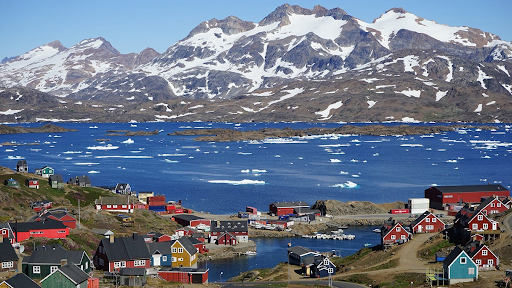



















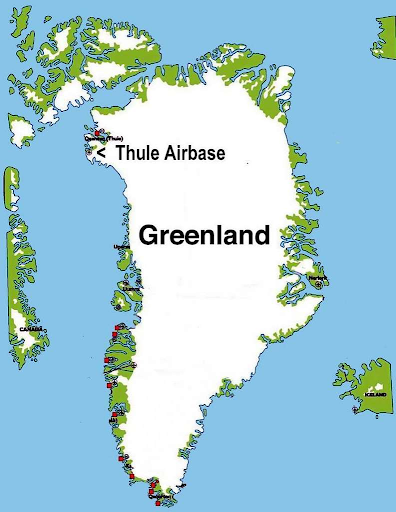
Greenland, the world’s largest island, is a vast, icy territory that has suddenly become one of the hottest topics in international politics. While it might look like just a giant block of ice on a map, this autonomous Danish territory is actually a strategic goldmine.
Beneath its massive, ancient ice sheet lies a treasure trove of rare earth minerals, the essential ingredients needed to build everything from your smartphone and laptop to electric car batteries and advanced military hardware. As the global economy shifts toward green energy and high-tech manufacturing, the country that controls or partners with Greenland gains a massive economic and industrial advantage.
Beyond the minerals, location is everything in the game of global politics. Greenland sits in a “sweet spot” of the Northern Hemisphere, positioned directly between North America and Europe while bordering the Arctic Ocean. For decades, the U.S. has operated Thule Air Base there, but the island’s importance is skyrocketing.
As climate change causes Arctic ice to melt at an alarming rate, once impassable waters are turning into new, faster shipping routes. This transformation makes Greenland a prime piece of real estate for monitoring international waters, housing advanced radar stations, and securing trade paths that were previously locked in ice.
A Recipe for Global Tension?
The push for increased influence in Greenland carries significant risks for world stability. The United States is far from the only nation eyeing the North; Russia and China are also investing heavily in the Arctic region. Russia has been reopening old Soviet-era military outposts along its coastline, and China has declared itself a “near-Arctic state,” seeking to build a “Polar Silk Road” through investment in Greenland’s infrastructure.
If the U.S. pushes too aggressively for control or suggests purchasing the territory—as has been proposed in the past—it could spark a “New Cold War” in the Arctic Circle. Such a move risks turning a historically peaceful and scientific region into a tense arena for military posturing and high-stakes standoffs.
This geopolitical friction has begun to strain the NATO alliance, the cornerstone of Western security. In early 2026, tensions escalated when U.S. officials suggested that “all options” could be considered to ensure the island remains under American influence, including using military power.
This stance has deeply offended Denmark, which maintains control over the territory of Greenland. Danish Prime Minister Mette Frederiksen warned that any attempt to bypass Denmark’s authority could signal “the end of NATO” and the traditional rules of international cooperation.
French President Emmanuel Macron has also joined the debate, calling the situation a “strategic wake-up call” for Europe. Macron argues that European nations must stand together to prevent their territories from being treated as pawns by larger powers, and France has even sent out naval and air assets to participate in Danish-led military exercises near the island to reinforce this point.
Perhaps most importantly, the people of Greenland, the Inuit, have their own voices and desires for independence. Any global power struggle over their land that ignores their right to self-determination could lead to social unrest and human rights concerns.
In the end, how the U.S. handles its interest in this icy jewel will be a major test of whether the world’s powers can share a changing planet or if the melting ice will simply expose new grounds for conflict.