


























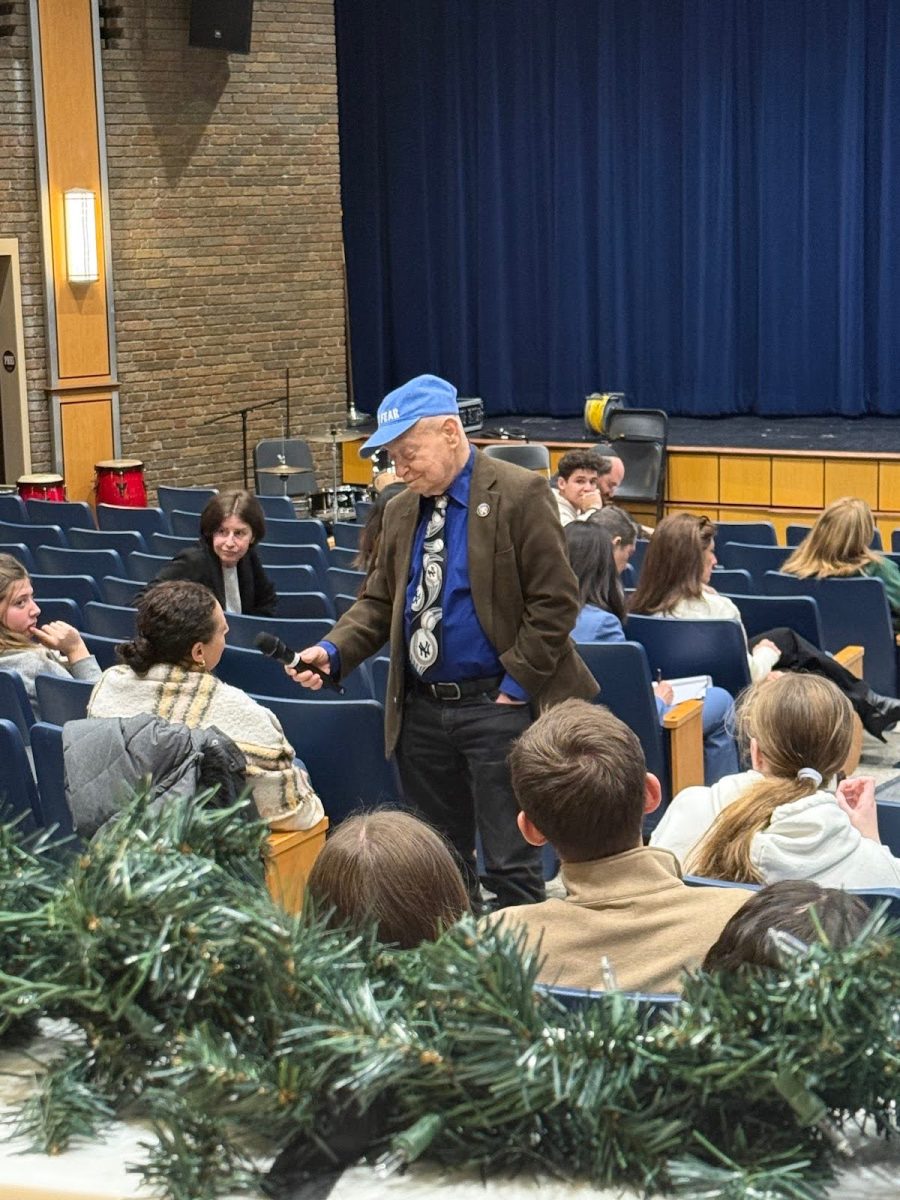
The education of the next generation continues to unfold before the Pascack Valley Regional School District. Holocaust survivor Sami Steigmann visited the Pascack Hills High school on Feb. 12 to tell his own story.
Sami, a victim of Nazi medical experimentation, told his unique recount of being subject to Nazi medical experimentation during his adolescence. Recalling the atrocities committed in the Mogilev-Podolsky labor camp (modern day Ukraine), he inspired students to combat hate in their own communities.
“Never be a perpetrator. But most importantly, never ever be a bystander,” Sami educated, “The greatest tragedy in human history, the Holocaust and all the genocides, happened because the world stood by and did nothing.”
From victim to survivor to educator
Sami has been many things: a victim, a survivor, and now an educator. It took him many long struggles to get to have the opportunity to indoctrinate the next generation of upstanders.
Sami was born on December 21, 1939 in Czernovitz, Bukovina (a part of the Austro-Hungarian) to orphan Nathan Steigmann and his wife Reghina Steigmann. As he would later recall later in life, it was Sami’s father’s street smarts as an orphan that enabled him to nourish the family during and after the war.
From 1941 through 1944, Sami survived the war with his parents while being put through intense medical experimentation. The Mogilev-Podolsky labor camp was liberated by the Red Army March 19 – 20, 1944.
The light in the tunnel of darkness
Death was mere inches away from the Steigmann family during Nazi occupation. In the camp, constant hunger and the Russian winter took the lives of victims daily. Food in the area was scarce, with mere commodities of survival, like bread, being sold on the black market. Sami would recall his father sacrificing his winter coat for a single loaf of the bread to save the family from starvation.
Seeing Sami’s weak condition and obvious signs of starvation — a big head, a swollen stomach, and swollen feet — a German woman decided to give Sami milk. The woman living on a farm near the camp, often brought food to the SS and Ukrainian guards stationed at the camp. Fortunately for Sami, the woman recognized the signs of starvation displayed across his body.
For Sami, a simple sip of milk at a time when his body was deprived of nourishment was the difference between life and death. By risking her and her family’s lives, she allowed Sami to survive to one day share his story. Never knowing the brave woman’s name, Sami was honored to see a tree honoring unknown heroes of the Righteous Among the Nations at the Yad Va’Shem Holocaust Memorial.
A tribute to the past
Despite being spared from Nazi extermination because of his medical trials, as well as the woman who saved him from starvation, the rest of Sami’s family was not so fortunate. The rest of Sami’s family, with the exception of an uncle who was granted asylum in Shanghai, perished.
By sharing his story to younger generations, Sami wishes to honor his 35 paternal family members murdered by the Nazis, as well as all countless victims who perished or were subject to Nazi medical experimentation.
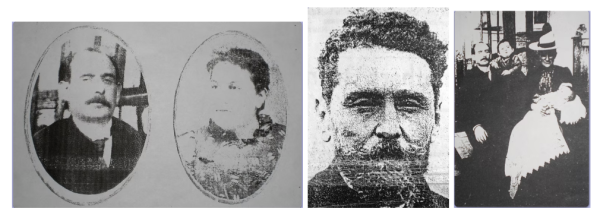
Pictures of Sami’s perished paternal family members.
“Together we can ensure the past will never be forgotten,” Sami shared to the #WeRemember campaign through the World Jewish Congress for International Holocaust Remembrance Day.
Telling his own story in his own words
Held on Thursday, Feb. 12, an interview was led by the Pascack Hill School JSU (Jewish Student Union) at 11 am. Students, both members and nonmembers of the JSU club, came to hear the inspirational speaker voice his story.
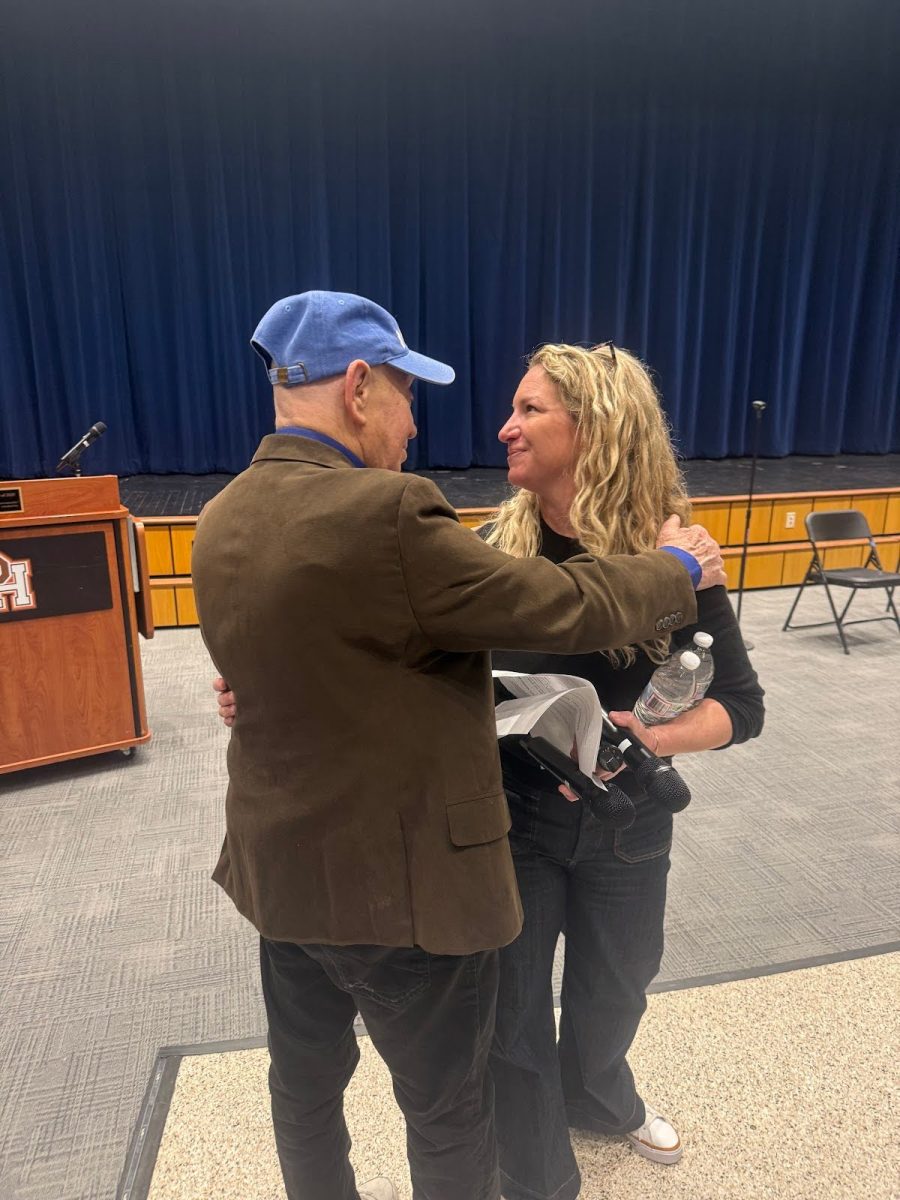
Students, as well as parents, were notified and invited to come by JSU president Eitan Rosenberg. The doors of the auditorium were open to all to experience the opportunity of a lifetime. Sami, a charismatic speaker with a warm and welcoming demeanor, was seen giving out hugs to every person he encountered.
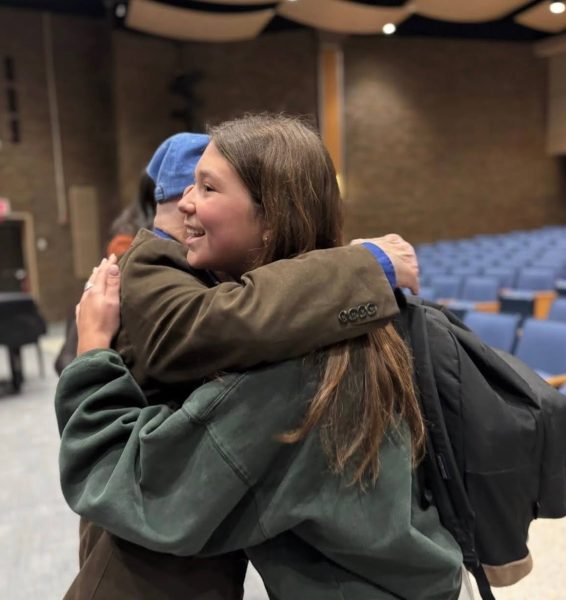
Sami Steigmann hugging student and active member of JSU Club Sophie Mayer
Steigmann, a charismatic speaker with a warm demeanor, was seen greeting attendees with hugs. His presentation was interactive; he frequently asked the audience questions about Holocaust statistics to gauge their knowledge and tailor his points to them.
Within the presentation, Sami took the stage. He enjoyed giving a visual presentation as well as an oral one, allowing himself to interact with the audience by asking them questions. Sami would ask them a question about a statistic of the Holocaust and then speak off their given answer. He enjoyed getting to see how much the audience knew and then based his presentation points off of their prior knowledge.
By the end of the presentation, he made sure that students knew not only his personal story, but all the unsung stories of those who perished in the multitude of Nazi led concentration, death, and internment camps.
“Auschwitz-Birkenau, Treblinka, Bełżec, Sobibór, Chełmno (Kulmhof), Majdanek (Lublin),” Sami urged the audience to repeat, “we must remember all of them.”
In relation to troubles of the future, Sami made sure the students, as they were the younger generation, knew their responsibility of fighting for justice and equality. He insisted on engraving statistics into the students minds of the Holocaust so that he hopes educated students will never let an atrocity like this happen again.
“At each stage [of the Holocaust], people knew about it, but they were silent,” Sami warns, “But as young people, it is your responsibility to oppose hatred as this shown.”
Through his interactive lesson, Sami stressed the importance of holocaust education in relation to modern times. However, he refused to let the atrocities dampen the mood of the address, as well as his life.
As evidenced by his life after facing the unimaginable, Sami has chosen to live by a motto. At the end of the presentation, he told students, “I am not what happened to me, I am what I choose to be.”
Check out a photo gallery from the event below: